
Save £40 on all new patient consultations

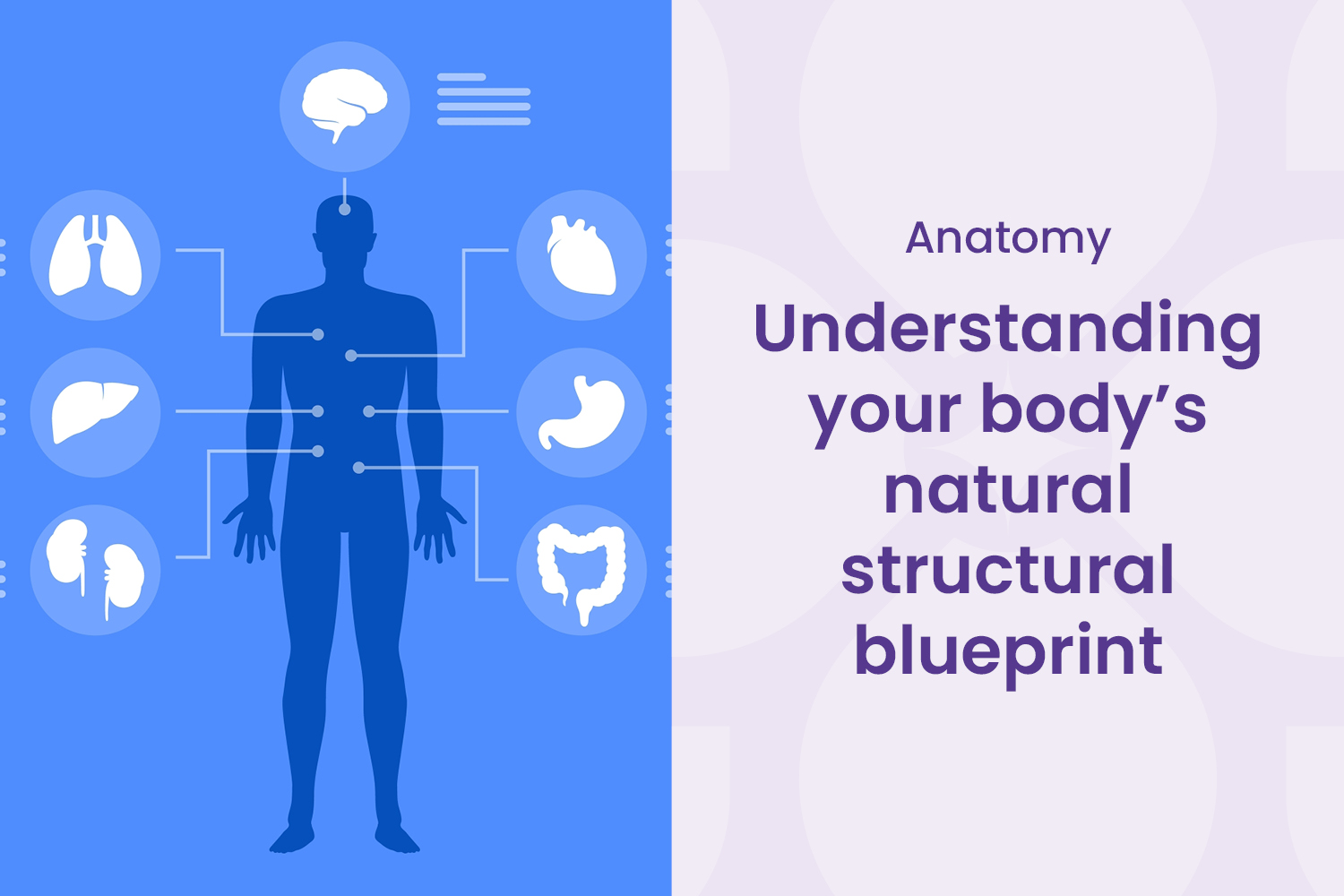
Your body has a very clear structural plan. It’s an incredibly well-organised system designed to manage load, movement, and balance with efficiency. When this design is functioning well, your body feels steady, coordinated, and capable.
Understanding your structural blueprint can change the way you think about tension, imbalance, and recovery.
Chiropractic care supports this structural blueprint. Improving joint movement and reducing areas of strain helps your body return to a more organised and mechanically efficient state.
Your structure follows a logical arrangement. Your feet form a base. Your legs transfer load upward. Your pelvis provides a foundation for your spine. Your spine positions your head and coordinates with your shoulders.
Each region has a role. When these roles are clear and well-balanced, weight moves through your body in a way that feels stable rather than effortful.
This is not about holding yourself in a position. It is about how your structure stacks and transfers load. When the stacking is efficient, muscles don’t need to grip unnecessarily. Movement feels smoother because the framework beneath it is organised.
Daily habits can gradually change how this architecture is expressed. Long hours sitting, repetitive tasks, past injuries, or protective movement patterns can all influence how your body arranges itself.
When one region shifts away from its optimal role, another area compensates. Over time, these compensations can become your new normal. They may not be dramatic, but they alter how force travels through your structure.
You might notice this as persistent stiffness, uneven tension, or a sense that certain areas are working harder than they should. The issue is often not weakness, but an altered organisation.
Your body functions as an interconnected system. A change in one area affects how load and movement are distributed elsewhere.
If your pelvis tilts slightly, your spine adjusts. If your thoracic spine stiffens, your neck and shoulders compensate. These shifts are not failures. They’re intelligent adaptations to maintain function.
However, when compensations persist, they can create inefficient patterns. Restoring even small aspects of structural organisation can improve how force is shared across your whole body.
Chiropractic care supports structural reorganisation by helping your body recover the natural sequence in which movement is meant to occur.
When certain areas become overworked or under‑involved, the order of movement can shift. Regions that should initiate movement may lag behind, while others step in too early or too often. By reducing mechanical interference, chiropractic care allows your body to return to a more efficient sequence.
Each region can take up its intended role, and movement flows through your structure in a way that feels more coherent.
As this sequencing becomes clearer, your body doesn’t need to rely on gripping or holding to stay upright. Your architecture expresses itself with more accuracy, and movement feels smoother because the underlying pattern is better organised.
When your body reflects its underlying blueprint, everyday activities feel less demanding. Standing requires less effort. Walking feels more fluid. You are not holding yourself together. You are supported by your structure.
This does not require perfection. It is a gradual refinement of how your body arranges itself under load.
By supporting joint movement and reducing mechanical strain, chiropractic care helps your structure return toward its intended organisation. Over time, this creates a body that feels more resilient, more balanced, and more capable of meeting daily demands without unnecessary effort.
Your structural blueprint is still present. With the right support, it can become clearer and more efficient again.